Editorial
What we shipped on StoryStudio lately, and why
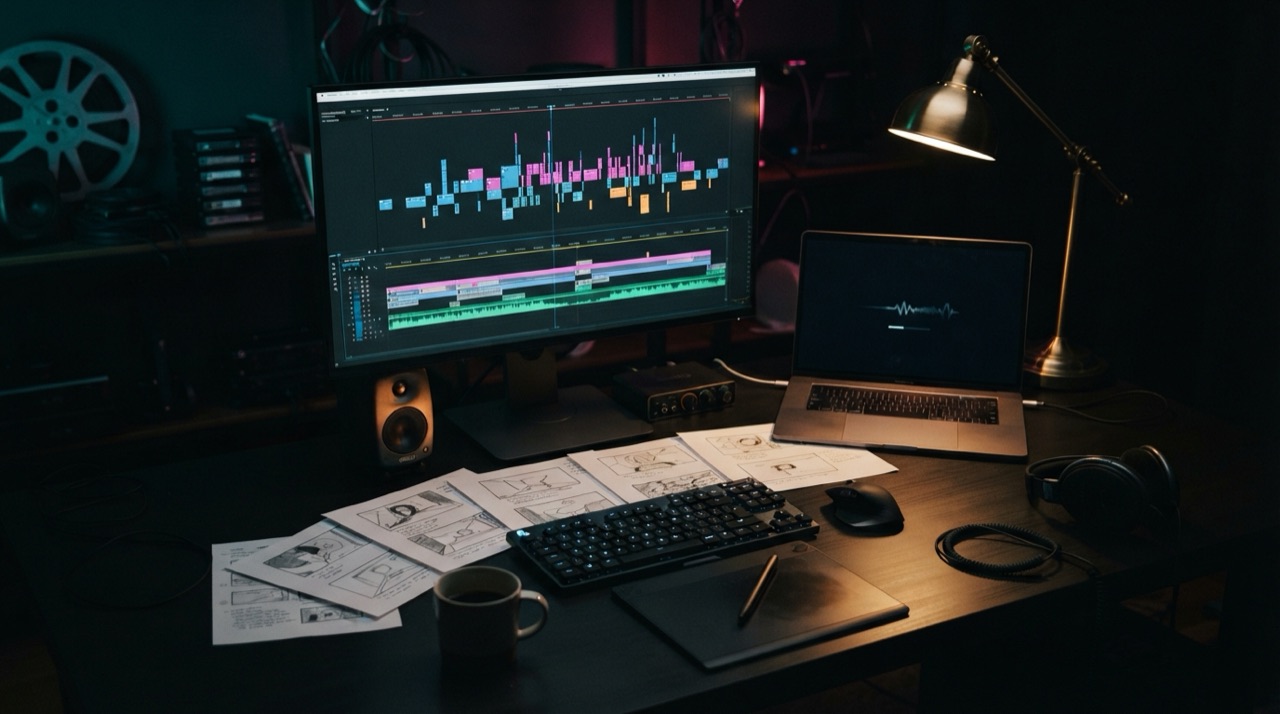
Most changelogs tell you what changed. Few tell you why, and the why is usually the useful part. So here is a short tour of what landed in StoryStudio between September and November 2026, with the problem behind each change.
We left out work on models we haven't documented on this site yet.
The editor now opens inside the conversation
You generate a few clips from Claude, then you want to cut them together. Until recently, that meant following a link and editing in another tab, which broke the flow of the whole session.
There is now a dedicated tool, `edit_video_canvas`, that opens the same timeline editor as a canvas. In Claude Code or the desktop app, it opens in the in-app browser pane. In Claude's chat, the "open the montage" button on a video card asks for full screen on your click, then loads the editor right there. If the host keeps the card small, you get a plain link instead. Leaving full screen hides the editor so it never sits on top of the card.
That last detail took a second fix. Claude only honors a switch to full screen when it directly follows a user click, so the order of operations mattered more than we expected. If you want the background on the editor itself, we covered it in the timeline editor article.
Videos play with sound
The video player in a chat card used to start muted. Playback only begins after you click anyway, so muting it protected nobody and made every first viewing silent. It now starts with sound.
Some hosts still refuse audible playback. In that case the player restarts muted and updates its controls, rather than leaving you with a play button that does nothing. There's also a round sound button next to the menu, and it always shows the same state as the menu entry.
Signing in from Cursor and Claude Code
StoryStudio uses OAuth, so your agent never holds a password. The catch is that each client sends its own return address after you approve access. Cursor has fixed callback addresses. Claude Code opens a local address on a port that changes from one session to the next.
Our server now accepts the exact Cursor callbacks and local `localhost` or `127.0.0.1` addresses with an explicit port. Addresses outside that allowlist are still refused. Loosening the rule to "accept everything local" would have been faster to write and worse for you. If Cursor is your editor, the Seedance from Cursor guide walks through the setup.
Job cards that don't give up
Video generation takes minutes. During those minutes, plenty can go wrong that has nothing to do with the video itself: the host reconnects, or a provider stops answering status checks.
We shipped several small fixes for that stretch of time. A card can now recover a job's status through the host's own connection, and when a provider can't report a status but the image is already saved on our side, you see the saved image instead of an error.
The last one is tiny. While a finished video is still being stored, the card shows when it last checked. A long wait now looks like a wait, not like a freeze.
None of these is exciting on its own. Together they decide whether you trust the card or start a second generation "just in case".
Scenes with several characters start with a placement image
When two or more characters share a scene, the agent is now instructed to show one wide image of the whole scene first, with every character placed in the actual set, including people who don't speak. You approve that placement, and only then does it generate the shots.
The rule exists because the expensive mistake in a multi-character scene is not a bad frame. It's a character who quietly disappears between shots, or a set that changes. Checking one still image costs far less than regenerating a sequence.
Seedance: reference videos and longer clips
Two changes on Seedance 2.5. You can now pass reference videos for motion or framing, up to ten, with at most 30 seconds in total. And story clips can run up to 30 seconds instead of being cut shorter.
We also corrected our own pages. Several of them still said "Seedance 2.0" and promised 4K. The model we call is Seedance 2.5, and our integration caps it at 1080p. Fixing marketing copy is not a feature, but publishing a wrong resolution is a bug, and we treat it like one.
What we take from it
Looking back over these weeks, very little of the work was about adding models. Most of it was about the minutes around a generation: where you edit, whether you hear the result, whether the card tells the truth while you wait. That's where an agent-driven tool earns trust or loses it.
Want to try the editor and the job cards from your own agent? StoryStudio has a free plan to start and works with Claude, Cursor, Codex and any MCP client.
Pricing: Free (5 credits, P-Image only) · Creator €14.99/mo (1,200 credits) · Pro €39.99/mo (3,500 credits) · Recharge €59.99 one-off (5,000 credits, no subscription). See full pricing →